ABOVEGROUND
LIMITED AVAILABILITY
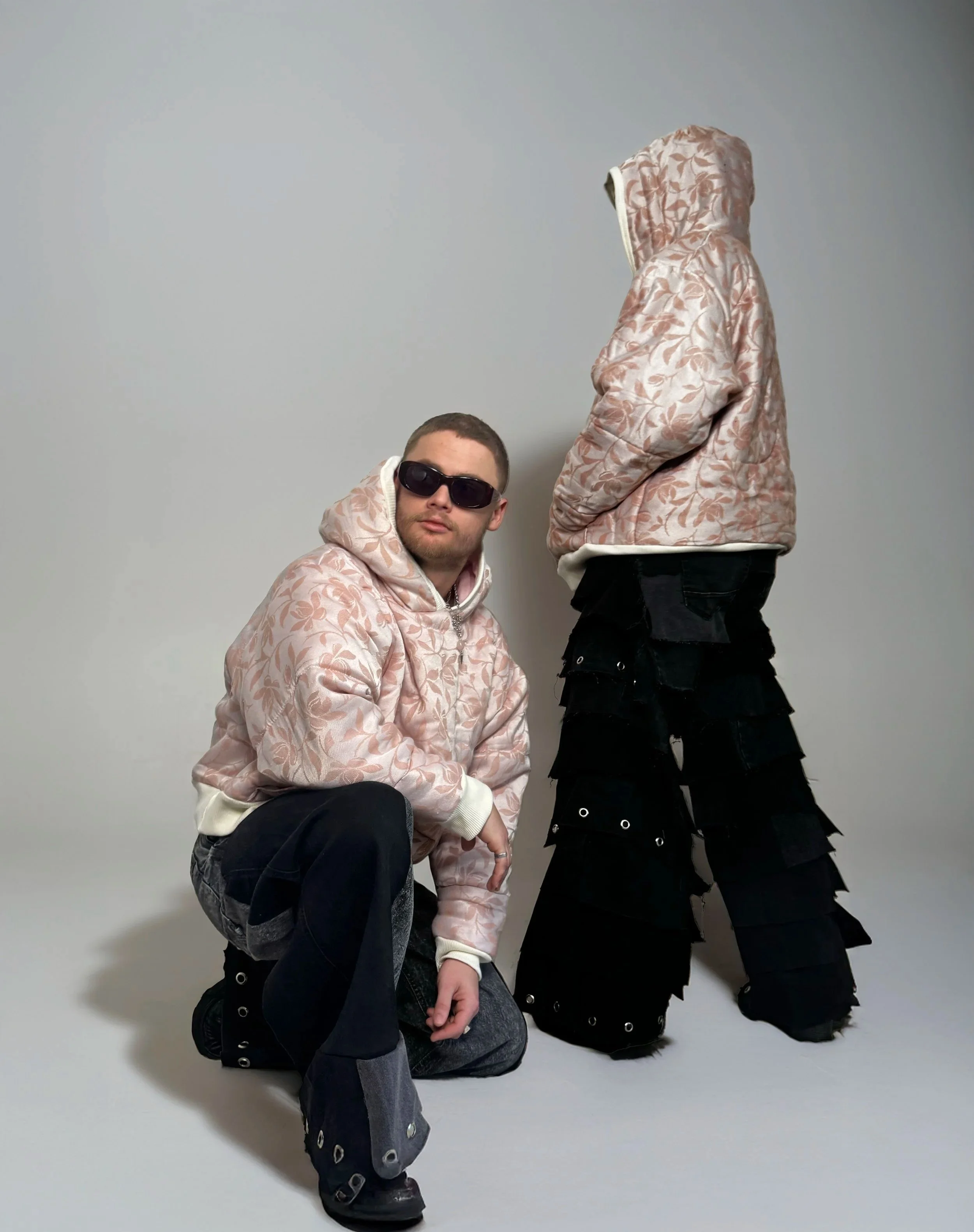
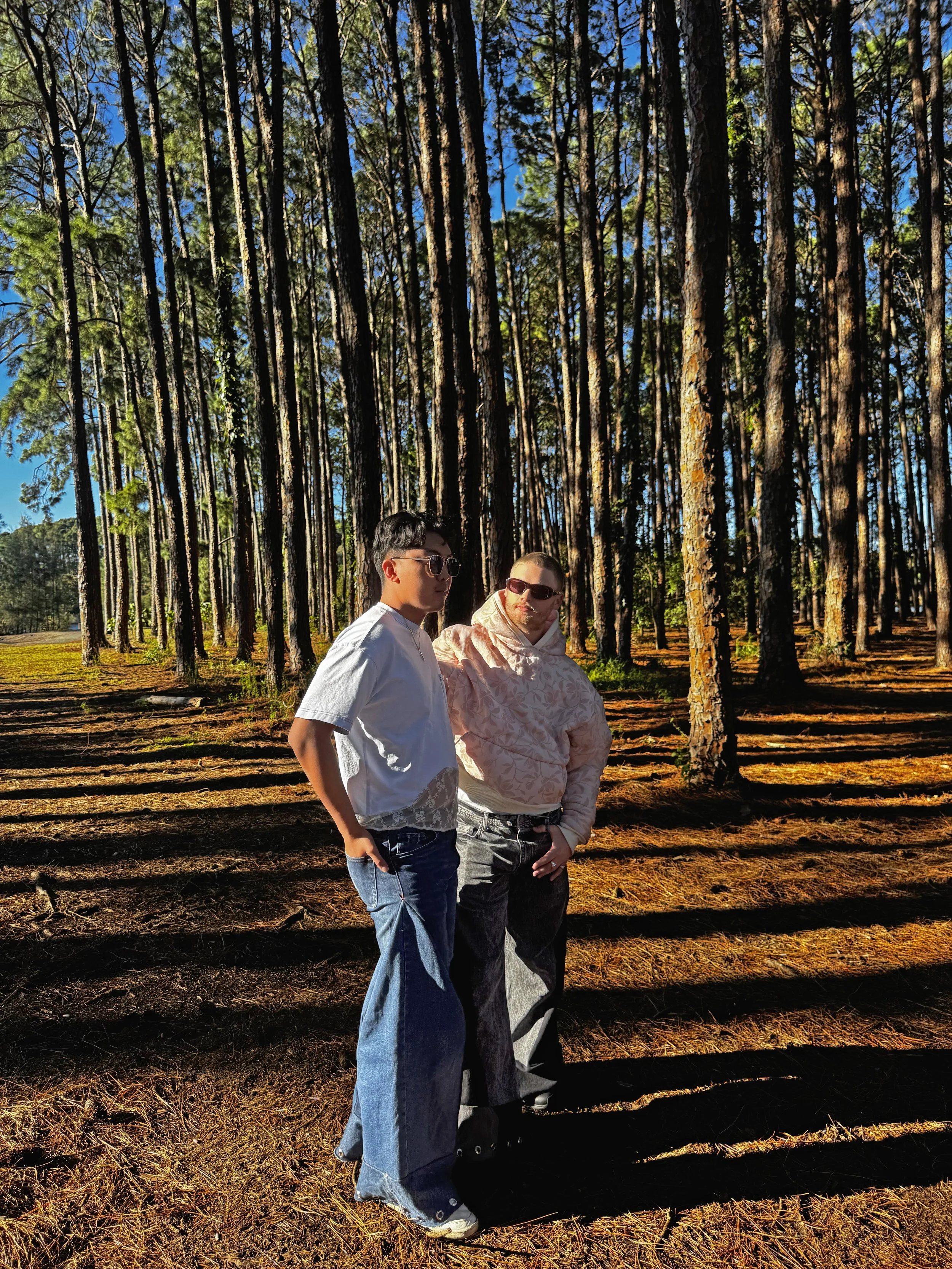
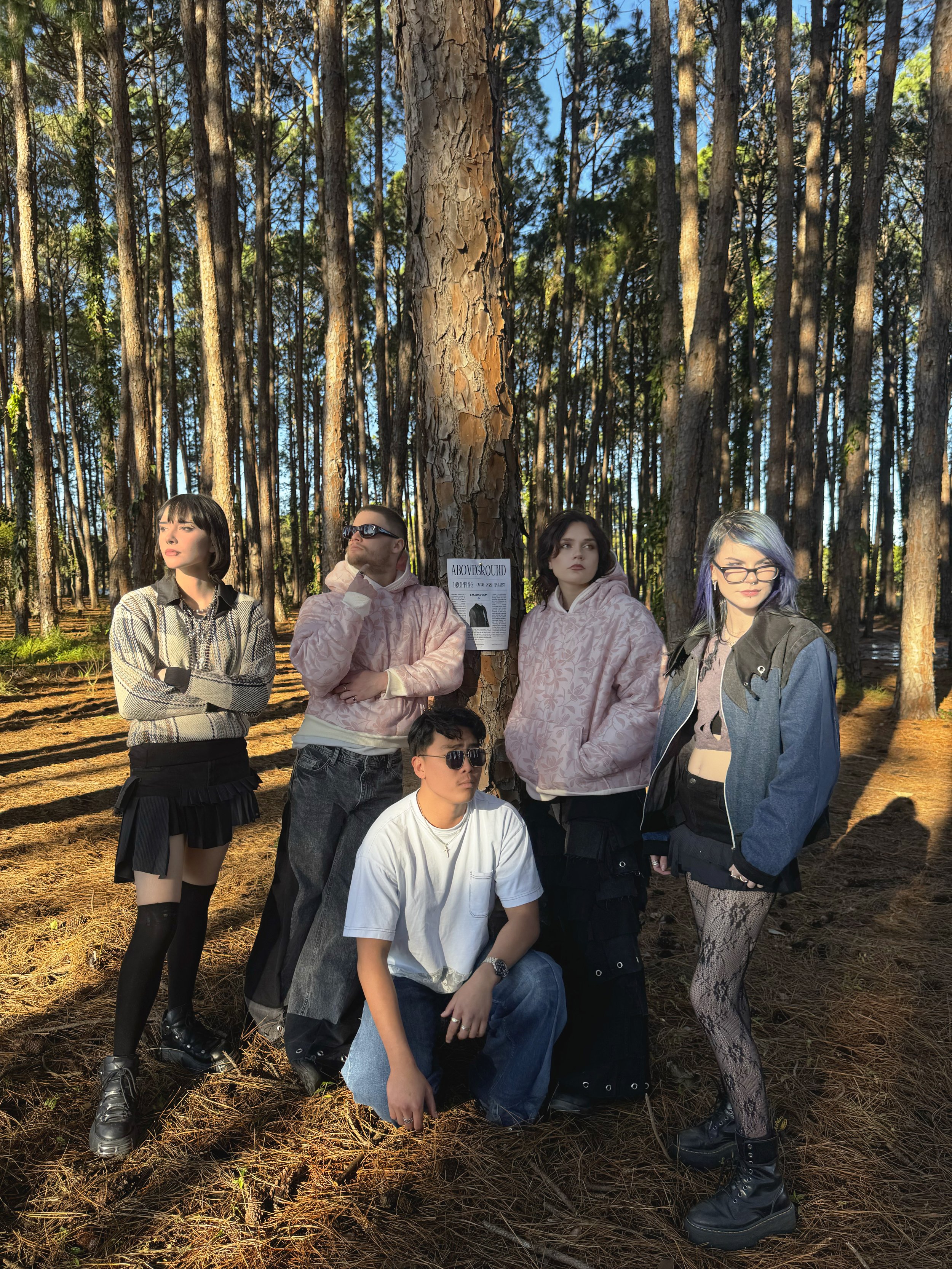
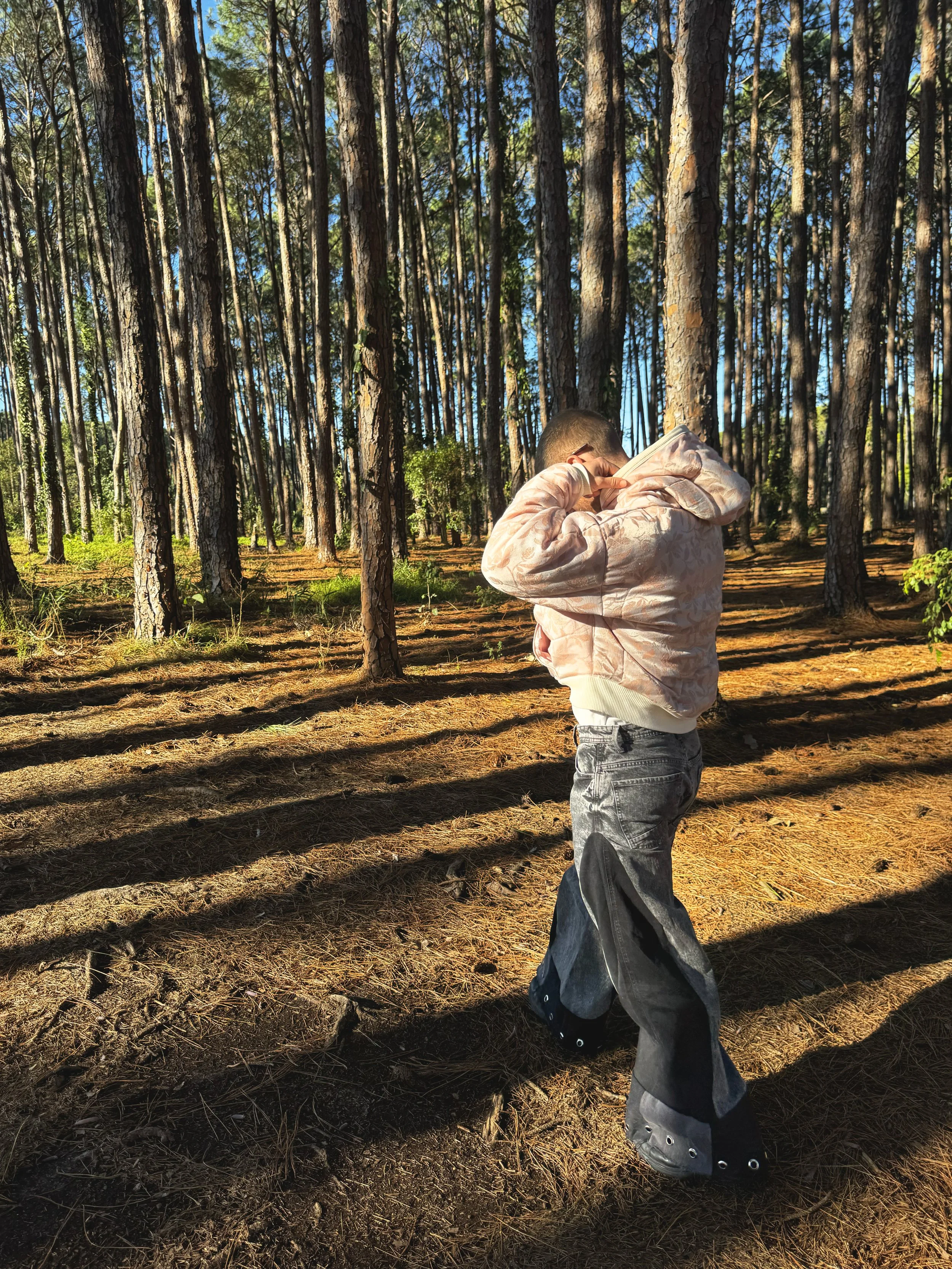
Light pink hoodie upcycled from a duvet. Cream accents at waistband, cuffs and hood. Oversized fit with front pocket. Limited availability.
Male model wearing size S. Height: 172cm.
Female model wearing size M. Height : 170cm.
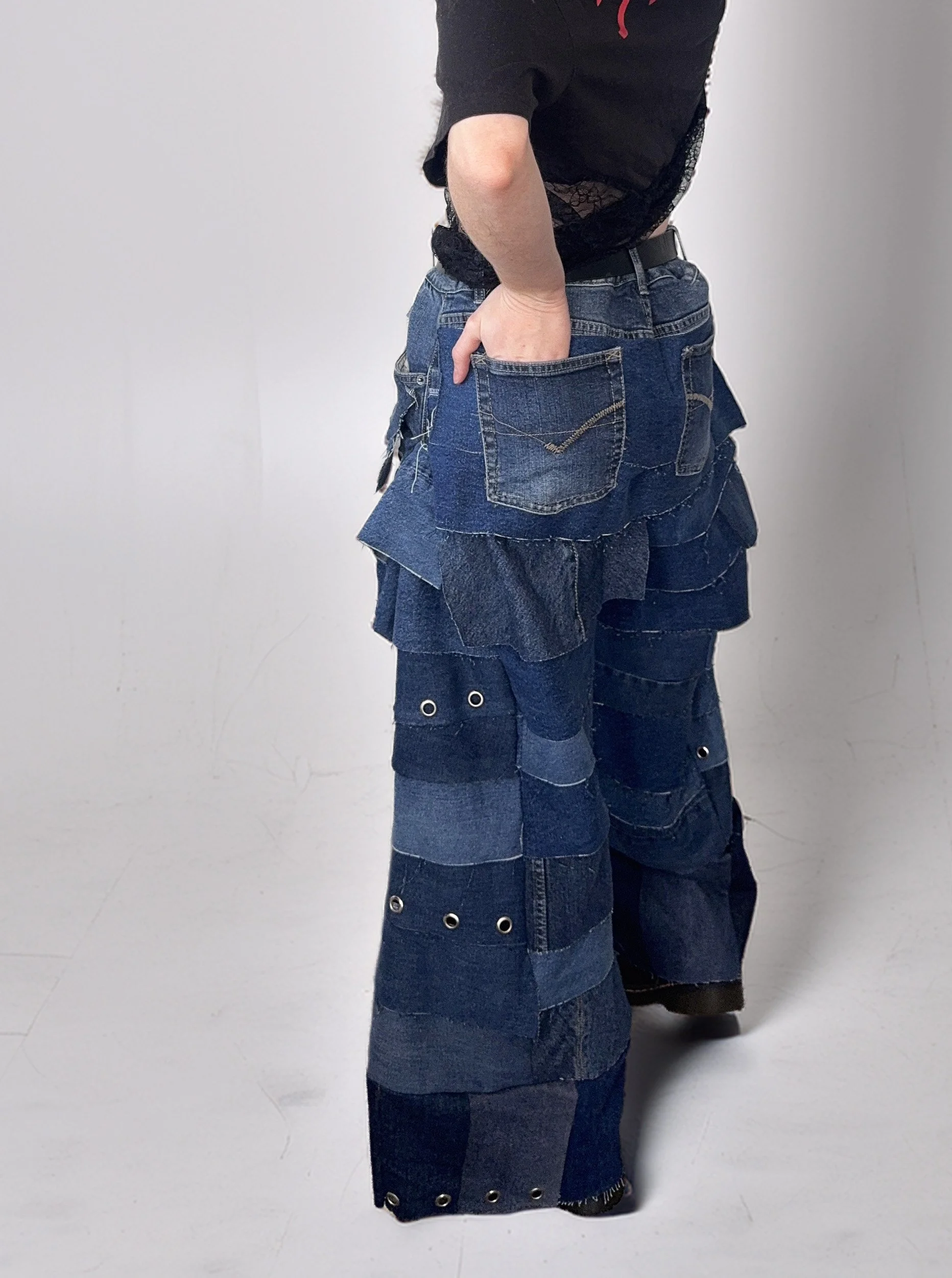
Blue upcycled jeans. Features layers of blue denim with silver grommet accents. Super baggy low rise. Made to fray.
Note: Colour tones will vary due to the nature of of upcycling. Every piece is unique.
Model wearing size 34”
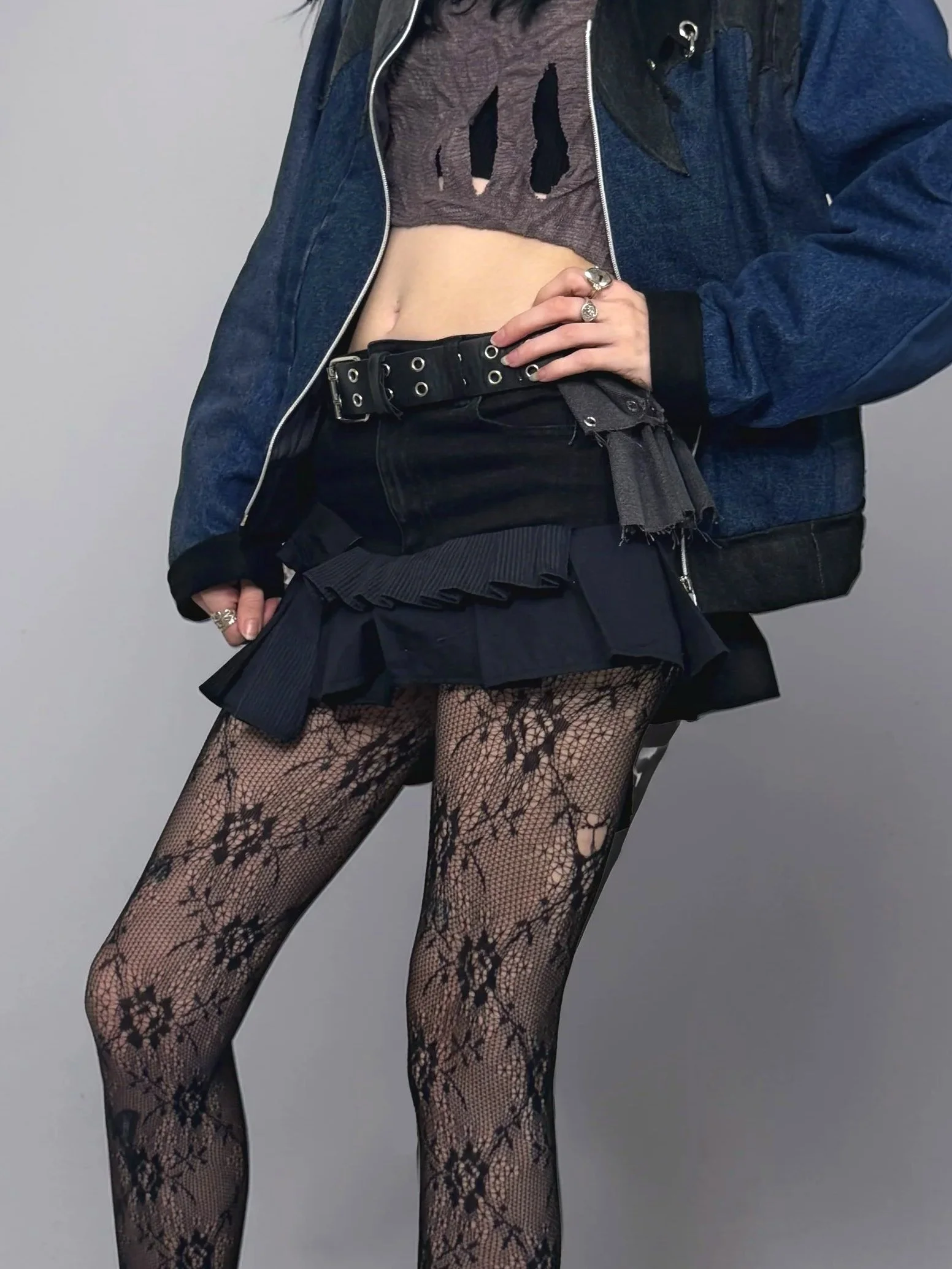
An upcycled combination of demin jeans and dress shirts are used to create the Wildcard Mini Skirt. Featuring an asymetrical drape, silver grommets, and pleats of every style and size.
Model wearing size 28”
ABOVEGROUND favourites

PIECE BY PIECE.
Sustainability in fashion is more urgent than ever.
Globally, 92 million tonnes of clothing waste end up in landfills each year—equivalent to one garbage truck of textiles dumped every second (Igini, 2024). In Australia alone, over 300,000 tonnes of clothing are discarded or exported annually (Gbor & Chollet, 2024). This textile turnover crisis highlights the need for greater support of sustainable practices. Donating old clothes to charity is widely seen as the most beneficial solution, but it’s at most a Band-Aid on a gunshot wound. While charity shops play a vital role in extending the life of garments, the reality is complex. On average, only 15–30% of donated clothes are sold in-store. A large portion is exported overseas (40–60%), while smaller percentages are recycled, upcycled, or unfortunately, sent to landfill or incinerated (SLU workshops, 2025).
That’s where FallingFrom comes in with our three core business practices.
1. Textiles used in garments made by us are procured from local charity shops. This prevents these materials from ending up in landfill and gives them a chance at second life in a new form.
2. Textile waste created by the production process is saved and repurposed for other projects — e.g., Scrap Bunny.
3. Pieces are made on a slow, small scale. Supporting the concept and implementation of sustainability within the fashion industry.
Until the industry decides to put ethics over profit, it’s up to consumers to support and fight for the change they want.
Is there anything more punk than that?